

What if the SDGs were introduced as a game? – how would the governments play them?
We can play good or bad games, impactful or dramatic, emotional or educational. The games are simulations of possible reality and I am deeply assured that after playing each game you bring a specific change to yourself and the environment surrounding you.
What if the endless online games with wars and fights become realistic and the reason of happenings nowadays (not necessarily in your city, country, but in another place) is the result of collective subconsciousness? Yet, we don’t have such evidence and wars used to be before the online games you may say. And you might be right, but almost.
I truly believe in the power of subconscious and simulation games as a way of creating a new reality, thus allowing us to experience emotions that further turn into something materialistic. If you can imagine it, sense it, feel it, then it is already being ‘baked up’ to become true.
I will switch from dramatic online games sample to more impactful ones, thus skipping a possible blame of me being old fashioned.


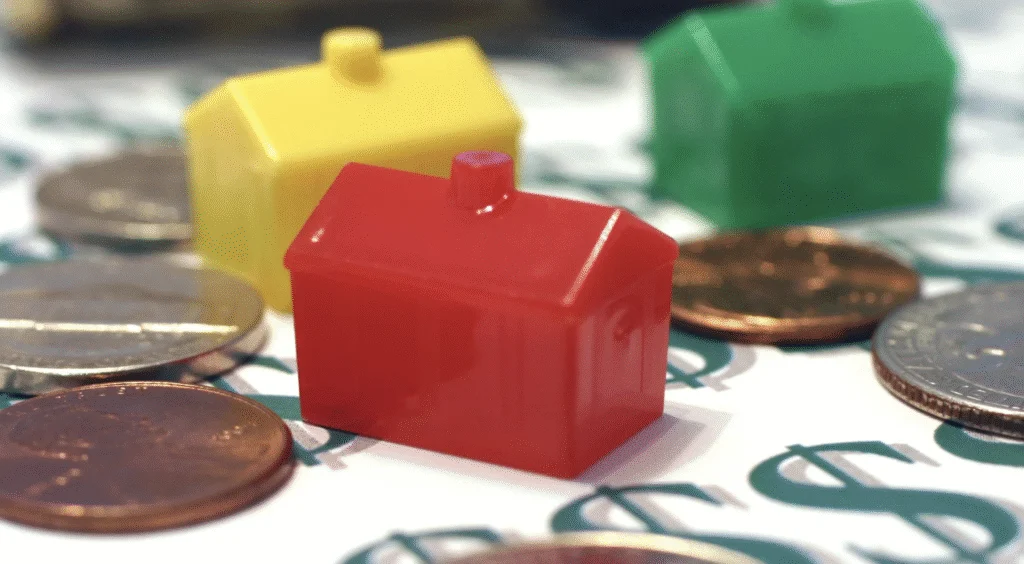
Let’s compare Monopoly with SDGs Game for example.
How does the Monopoly game affect us?
If you (like me) believe that the simulation becomes materialistic over time, then what world could we build with the rule of ‘one wins and the rest – fail’? I personally feel reluctant when playing Monopoly, as I don’t want to celebrate in loneliness being assured the rest are unhappy. On the contrary, when I played the SDGs Card game (about which I shared on my previous posts), I could sense the interconnectedness and impact of my actions with the simulated ‘rest of the world’.
The SDG card games themselves which I played – I don’t find them perfect either. The reason is that you can’t buy them anywhere, you are encouraged to take a facilitator training program which costs over 3ooo Euros in order to be eligible to buy the boxes with cards. Such a business model forces me to tolerate the choice of the founders. But since the climate is in the emergency, I believe it could bring a better impact if training would be more affordable and cards themselves available to broader audiences.
And by the way, how well do you know the Sustainable Development Goals (SDGs)? Whether you are familiar with them or not, my favorite way to educate them during workshops is to give a simple case, allowing participants to see how the goals are interconnected. I typically use this SDG dashboard with cards and try to not only guess which ones are hidden behind the cards, but build assumptions based on case studies on ‘what happens next, if …’ .
For example, imagine a case study with children being forced to work and an NGO initiating a school construction. The questions to the audience: What happens next? Which SDGs could be involved, and what might the sustainable impact look like?
On the contrary, imagine a farmer using toxic chemicals for agricultural purpose: What happens to the land? and the water? and your health? How do other SDGs are involved? Which case goes up, which – down, what are the long- and shortterms consequences, and so on.
I first introduced the dashboard to students while teaching corporate governance. Recently, I also presented it to school teachers during the workshop with EduArmenia.
That is why now I’m thinking what could the simulation game really look like, if governments would be playing for entering the era of SDG 2050 … , allowing participants not just to “remember” the names of the goals, but to experience a sense of belonging and interconnectedness. What if … ?

Interactive “Guess SDG” game













Source: Originally posted on LinkedIn