
Circular vs. Sustainable Business: What’s the Difference?

1. Challenges and Limits of Circularity

1.1 Not everything that’s circular is sustainable.

When I first heard this phrase, it brought a deep sense of quietness to me, shifting the attitude from worshipping the circular economy towards accepting that it is not as simple as I wished — not as perfect as the waste-free circular processes of Mother Earth. And worshipping is the right wording here, as some find a sense of relief in pursuing climate action as a replacement for religion. But if we stop looking at it as a religion — as a set of rules guaranteeing us heaven — we can experiment and nurture many varieties of solutions that are optimized and compromised rather than idealized.

Paper recycling, for example, requires massive amounts of water; moreover, during the recycling stages the water often becomes polluted, and if it is not filtered, it can harm local water sources and surrounding ecosystems. In addition, paper cannot be recycled endlessly — it has a limit of only a few cycles, which means that trees are still needed for new paper production. There are already existing solutions to these disappointments of mine, such as filters that clean the water before it is released back into the environment. Moreover, circular processes make it possible to endlessly reuse the same water. So that’s it, all problems solved, and we have a perfect circular process? I kept asking more: “What else? Or what about…?” as I went deeper. What about the filters themselves — they eventually become waste, and true circularity implies that no such waste should exist at all. But is that so?

Of course, solutions are endless. For paper recycling, closed-loop processes have already been developed that allow water to be reused indefinitely. Even the waste heat from the water-cleaning filters can be used to warmup houses, and the plastic from the filters themselves can also find a path to recycling… and suddenly everything seems to fall into place — almost zero waste.

And when I look at these processes, I no longer see just circularity, but rather an endless spiral when asking What else? How else it could have been done more sustainable?

1.2. It is not so much about Circularity as it is about Resource Efficiency. With the devil in the details — data on understanding how much each resource (Land, Water, Minerals, Air) costs to us and to Nature — we do the work for the resources, as they cannot speak for themselves. It becomes a bit clearer how sustainable our Circular actions really are.

And the more we design and iterate the Circular Economy in business operations, the better the processes will be redesigned and the richer the set of solutions discovered.

Just as each bug’ has its own purpose for the entire system, Just as every word in a language carries meaning and contributes to the richness of expressions or a Gallerist learns to recognize the value of each masterpiece through years of experience, the same should happen with the Circular Economy replacing the Linear one and offering a bouquet of “Models” for Economists and Management Strategists to pick and apply.

Maybe we are in the phase of generating a whole new Encyclopedia of Circular Business Solutions.

circular business models

2. Circular Business Models: How to Integrate it into Canvas

Traditionally, business models focus on defining the customer segments, key activities, required resources, partnerships, and customer relationships. We ask: Who is the target audience? Who are the partners? At the beginning, this makes sense for the go-to-market strategy. However, with Circularity in business models, the questions starting with What and How shift to How long? What else? How else? Where else? Thus, we discover additional phases through which products (and the resources they are made of) can continue sustaining.

I spent some time trying to understand if there was a universal structure, such as Osterwalder’s Business Model Canvas, but for Circularity — so that when applied, you know you have gone through the process and ensured that you answered all necessary questions. But it is not as easy as it seems.

I have tried to merge Osterwalder’s Business Model Canvas with the Circular Business Model (example presented by Lund University). What they do is go through the business model questions for separate stages of the product life cycle: before production (extraction, collection), during production, and after sales. Moreover, by generating as many questions as possible, we can see how Circularity can be applied not only to the product being marketed, but also to the entire operational process.

I find they do it beautifully by placing the Business Model metrics in one vertical column — instead of expanding everything on one dashboard as in Osterwalder’s Canvas. But unfortunately, it does not help to come up with one generic template that says: here is a tool, a methodology — use it, scale it for your own business. Every time the idea of Circularity comes to mind, you might get confused about whether the key element you are investigating is the product, the resources, or the processes. What is primary and what is secondary? In fact, they all matter when it comes to applying Circularity. But once they all matter, chaos in business modeling becomes inevitable. And a structure is still needed.

And what matters even more is remaining lucrative while pursuing Circularity. So it is not an easy task to wrap Circularity into one dashboard, as in the example by Lund University. With Design Thinking processes, it becomes possible to unbox all knowledge with the help of smart questions and then wrap it back into whatever forms it needs to take.

That is why I refer to Circularity as a bouquet of solutions or an Encyclopedia, where you have endless ways to tackle the process. Some might be purely circular, others both circular and resource-efficient, others questionable when not sustainable — and many more options. And they all make sense, as they can inspire, be used, reused, or repurposed … similar to resources. In such a case, no idea or solution is a waste, just as no material product (object) is not a waste.

I like how nowadays waste management companies present slogans such as “Wow, what a waste.” This approach encourages us to produce and consume more mindfully.

What questions might we want to ask to design a business model for each case?

Design & Strategy

1) How else could we extend the life cycle — repurpose? repair? remanufacture? refurbish?

2) What are the ways to produce better products — durability? modularity? reuse?

3) How do we produce less waste — renewable? recycled? upcycled?

4) How do we motivate returns — leasing? renting? sharing?

5) How do we track the logistics of products — take-back systems? deposits? partnerships?

To conclude here I would ask any question with this mindset:

How can I value you more before ungracefully labeling as ‘waste’?

3. Circular Business Models in Practice

It is only a matter of time before we see award-winning companies recognized for durability and for loyalty to resources — as a mindset of appreciating and showing gratitude to each resource that generates income for the business. Today the KPI is a returning client; tomorrow it will be durability, with lucrativeness coming from long-term customer relations.

As I mentioned with the Encyclopedia of Circular Business Models, the best way to learn is to ask how others are doing it. I am listing the most common and my favorite models below. I believe the more we learn from others, the more we are capable of shaping and generating our own vision of how to apply Circularity with Sustainability and Profitability in mind.

What are the common circular business models?

Product as a Service (PaaS). Customers pay for use, not ownership (leasing, renting, pay-per-use). A great example is “Light as a Service” — the Circular lighting at Amsterdam’s Schiphol Airport by Philips, where the business is paid for lighting, not for lamps.

Resource Recovery. Recovering useful resources or energy from waste, by-products, or end-of-life products enables closed-loop business models. An example is recyclable EV batteries offered by Umicore. By recovering batteries and feeding them back into new EV battery production, the process enables automotive companies to source circularly instead of following the linear model. Other good examples include using waste heat or materials from one industry as input for another. Classic cases are Kalundborg Symbiosis (Denmark) or Rotterdam Port (Netherlands), where waste heat is used to warm homes.

Sharing Platforms. Maximizing the use of underutilized assets by enabling shared access, such as car-sharing or tool libraries. A practical example is Leihladen Köln — renting tools instead of buying them.

Product Life Extension. Extending product life through repair, maintenance, upgrading, resale, or second-hand markets. Examples include IKEA’s Buyback & Resell or IKEA Zweite-Chance-Service, which allows customers to gain points for future purchases when returning used products. Other examples are platforms for circular construction, enabling the resale and reuse of building components (doors, windows, flooring, etc.), such as Concular (Germany) or similar marketplaces that reduce construction waste.

And let us remember: while we look at how others are already doing it, there is always space for the a-ha moment — an insight that might add a new approach to Circular Business Model to the Encyclopedia of yours.



Why is your SMART goal not smart?

1. What is a SMART Goal?

The SMART goal is a widely used methodology in business planning, allowing you to plan, delegate, and coordinate more effectively, as well as build trust—especially among investors and financial institutions that want to see how you measure success, how you plan to achieve it, and what the expected ROI time frame is. It is also commonly used in other areas, such as setting career or personal development goals.

When setting the goal, you might want to go through the following questions to make sure all the details were considered:

Check-List of SMART-Goal Questions

Specific: What? Where? How? Who? Such as: What is my goal? What do I want to achieve? Where is it going to happen? How am I going to achieve it? Who are the people/partners/stakeholders I am going to be engaged with?

Measurable: How much? How many? Such as number of items, pieces, amounts in €, $, or other currencies, sq. meters, kilometers, kilograms, % of increase or decline, and many others. Choosing the right metric for success is kind of an art , and I will share a few insights on it down below.

Attractive: How is that aligned with my values? Mission statement? Many times Achievable or Agreed is used instead of Attractive. I find the latter more useful, allowing to connect with values that drive motivation. Just choose the one you feel makes sense.

Realistic: How realistic is my goal? Is the time given enough for achieving it? Are the listed Metric or Specifics realistic to be accomplished within the given time?

Time: When? From when? By when?

Example of Setting a SMART Goal.

Case Study: Wind Power Energy

Disclaimer: The goal setting described in this article is a fictional template. Numbers are not based on any realistic data, Wind Power Energy or Argentina are simply cool romantic.

Let’s look at one example: the intention is to successfully enter new geographical markets and offer clean energy.

Version 1: The initial SMART goal could sound like this:

By June 2030, my company expands its global presence by entering two additional South American markets with favorable economic policies (e.g., taxation) and climate conditions for wind energy. This expansion is expected to result in a 300% increase in revenue by the end of the period.

The Specifics here are the chosen geography, the preferences in economic policies and climate. Conducting more research will allow us to select the exact locations — for example, replace “two markets” with Argentina, Chile, or even more specific regions. The details can go beyond location. For instance: How am I going to do it? Will I set up production there, or will I ship from my existing factory?

Now, how do I measure the success? In this example the Measurables (quantitive indicators) are 2 Countries and 300% revenue increase. But how do I know which indicators are true for my success? There are multiple variations on what kind of metrics to choose. It is important to be aware of that fact that the metrics for the sales or financial department will sound differently than for the HR or Corporate Sustainability departments. Though in the perfect world they are aligned with the strategic vision of the company.

June 2023 – is the Time (deadline) for asking: Have we made it or not?

The “A” stands for Attractiveness, aligning the goal with the company’s mission and values. Should the company consider partnerships with local manufacturers, allowing cost cuts on production? Should local resource extraction be considered, enabling the company not only to provide clean energy but also to create a supply chain aligned with a circularity mindset?

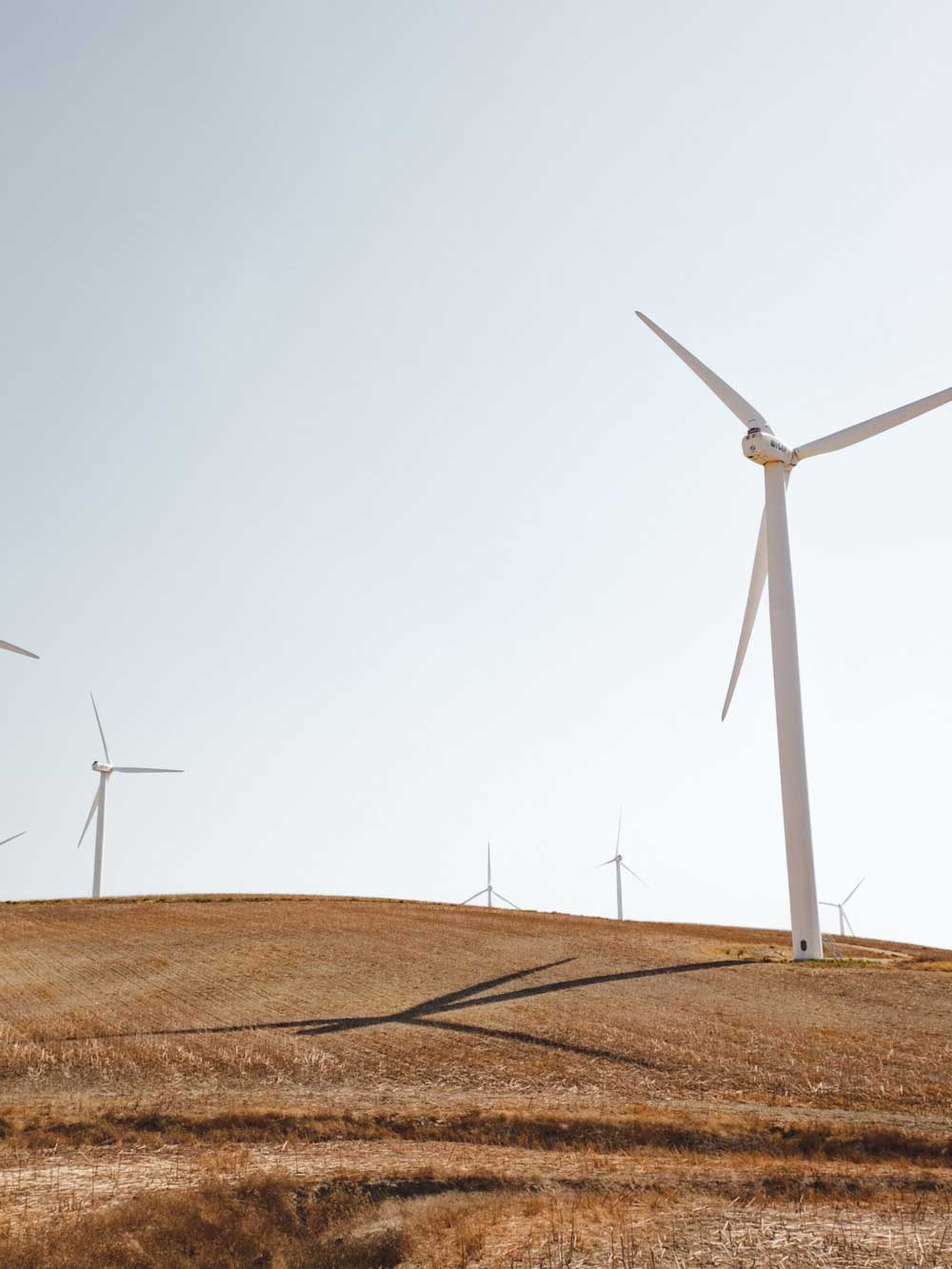
Wind turbines standing on a grassy plain, against a blue sky.
The sun shining over a ridge leading down into the shore. In the distance, a car drives down a road.

Therefore, you might want to revisit the goal setting and include more Specifics and Attractiveness.

Version 2: The SMART goal could sound like this:

Starting in June 2030, my company begins expanding into up to five South American markets by exploring methods allowing better transportation and improved modularity in assembly of wind turbines. The aim is to reduce transportation costs by approximately 35% compared to current metrics, while contributing to more effective and sustainable use of regional resources.

Now, with more Specifics provided, the next question arises: how Realistic is it? Research should be conducted to identify applicable locations, experts consulted to share their vision, and the favorability of policies should be verified by connecting with public institutions and assessing their openness to collaboration or potential client relationships. The deadline could be triggered and postponed, as more uncertainties arise with the expected innovations.

2. What is the environment for my goal?

When setting a goal, in addition to using the SMART Goal framework, I offer a few deeper questions to better understand the environment in which the goal is being pursued:

1) Is my goal or challenge unfolding in a predictable or unpredictable world?

2) Is this a dream goal driven by purpose and meaning—a big “Why”? Or is it an end goal with a clear target and measurable outcome?

3) Do I have a clear vision for this goal? If not, is it even possible to have one in the given environment?

4) Does this goal have an ‘End-Station’? In other words, am I playing a finite or an infinite game?

5) What type of environment am I operating in: simple, complicated, complex, or chaotic? And by the way, aren’t “complicated” and “complex” the same?

The information below offers ideas to ‘locate’ the challenge. It is based on the Cynefin (Ke-ne-vin) framework (Complexity Theory).

Unpredictable EnvironmentPredictable Environment
🌳 Complex: In this world, we have multiple stakeholders with no agreed vision and diverse values. Idea generation and multiple areas of expertise are applied for collaboration. Action: collaborate to innovate, experiment, and learn.🛠️ Complicated: In this world we have a clear vision and goal, are data driven, rely on past case studies, strong specialisation and expertise to gain confidence in our decision-making. Action: Coordinate to record, analyse, and make a decision.
🌪️ Chaotic: Proactive steps are taken to stabilize the system — such as during a war or pandemic — and shift it toward either a complex or complicated environment allowing collaboration or coordination. Action: control to mitigate side effects.🗓️ Simple: This is a setting with the tasks to be easy, specific, repetitive,. If not automated yet, they can be boring and become a ritual toward simply doing. This environment invites practicing presence and appreciating simplicity. Categorise tasks, delegate, and act.

Source: Working in Complexity (WiC), jointly offered by Climate-KIC Academy & Cultivating Leadership Development Coaching, 2020/21.

I have generated a few examples to give a better sense of them (this is purely how I would understand and differentiate them).

Complicated:

  • Production and/or installation of a sophisticated equipment
  • Car repair required by a professional, specializing in that area
  • Proceeding with a complicated surgery by a doctor in a hospital
  • Job seeking for roles where you have a strong expertise in.

Complex:

  • Innovation of a system for ease of assembly of a sophisticated equipment
  • Designing a concept car based on clean energy
  • Modernizing hospital operations to reduce medical waste
  • Pursuing a career change in an unknown industry

Case Study Analysis.

The sun shining over a ridge leading down into the shore. In the distance, a car drives down a road.

So, if we look back at the first version of the goal we set above, we can assume that it operates more or less in a predictable environment, because the success will largely depend on the expertise of engineers, project managers, financial managers and other operational managers. They will be responsible for coordinating and executing the plan—something they have (hopefully) done successfully in the past. While risks still exist, the SMART goal appears achievable within this setting, especially since it has a defined end point.

In contrast, the second version introduces innovation and experimentation, bringing with it a higher degree of unpredictability. If the company pursues initiatives it hasn’t undertaken before—such as local resource extraction or improved modularity in assembly—it enters a complex environment filled with many unknowns.

In this scenario, success cannot be measured solely by predefined outcomes. Instead, it is evaluated through lessons learned, insights gained, and experience accumulated—allowing for a deeper, more adaptive sense of progress.

Sticking only to measurables and a fixed timeline, and simply asking “Did I meet my goal in 2030?” would not be smart, as this alone does not fully reflect success or failure.

What many of us miss also is that not every measurable truly reflects goal success. The confusion often arises from expecting to measure a ‘Dream goal’ in a complex world. This doesn’t mean SMART goals shouldn’t be set in this environment — rather, they should be used differently. In a complicated world, SMART goals point to a fixed end station; in a complex world, they act more like a navigation system, helping us stay aware of our direction. In such an environment, the fear of failure around innovation and learning diminishes, since progress is not strictly tied to strict metrics.

3. So when is the SMART not smart?

What makes setting a SMART goal not smart is having the wrong expectations about it. The following examples I tried to illustrate through the lens of predictabile & unpredictabile environments:

3.1. When you create experiments in the predictable world…

a) Your goal is to design a landing page, business card, or something similar—something you’re experienced at. The goal is simple for you. However, your colleagues might treat it as a fun team-building activity full of brainstorming and co-creation. This can lead to misaligned (non-agreed) goals: you’re aiming for simplicity and results, while others focus on the process and authenticity. What seems like a simple, straightforward task to you can quickly become a chaotic project delivery.

In such cases, experiments and brainstorming in a simple world can be frustrating—especially when your vision is focused on getting things done on time. Therefore, when setting up experiments and co-creating in a predictable world, your SMART goal starts fading away.

b) Another example is when non-experts make decisions for experts. I spoke with three architects—from different companies—who all quit their jobs after successful careers spanning 5 to 10 years. They all said the similar thing: their instructions and guidelines are often ignored by construction companies. One of them added, “Why would people follow the instructions of doctors but neglect mine? I am an expert as well!”

In this case, the implementers neglected the expert’s vision, making some of their Specific metrics irrelevant. While you created and expected predictability through the given instructions, the partners adapted them according to their own visions.

So what these architects often struggled with was the inability to create or innovate something truly new. Frustration arises because construction companies tend to avoid ideas that haven’t been implemented before — aiming to minimize risks and costs, which is normal for the predictable environment. As a result, they often dismiss architects’ those decisions that are less about safety and more about creativity.

3.2. When you expect predictability from the complex world….

Now, imagine the opposite: the environment is complex, but goals expected like in the predictable world. The SDGs 2030 (Sustainable Development Goals) are great examples of the complex environment. Even if they are measured, time-restricted, and specified with 17 different goals and sub-goals, it is difficult to have a clear vision of what the world would look like when all are achieved by the UN members. The approach here is to learn from what has been done and to adjust for the future 2050 milestone.

Those who get stressed because targets aren’t met by the deadline are expecting the complex world to behave like a complicated one. But even if the targets are far from what was planned, it doesn’t mean the goals have failed (or will, since we still have five years).

In the settings of the complex world, SMARTs serve as a navigation system and not an end station. Success is not measured solely by predefined metrics. This can be very disappointing for those who prefer discipline and control. The best is to self-reflect and be aware of own limitations, such as the ‘agile is not my thing’.

To conclude, the true benefit of goal setting comes from using additional questions (as given in the second section) to better understand the specifics of the environment. It may represent a dream goal rather than a fixed end goal and it might be your navigation system rather than an end-station.

Thank you!